

Associate in Science in Diagnostic Medical Sonography
Prepare for a hands-on career in diagnostic imaging through a combination of academic instruction, scanning laboratory practice, and supervised clinical experience.

24-Month Program*
Complete the program in approximately 104 weeks.1

Extensive Clinical Training
Complete 960 hours of supervised clinical externship.

Blended Learning
Combine online instruction with hands-on laboratory and clinical training.
Overview
Prepare for a Career in Diagnostic Medical Sonography
The Diagnostic Medical Sonography program at CNI College is designed to prepare students with the knowledge, technical skills, and clinical experience needed to pursue entry-level work as diagnostic medical sonographers.
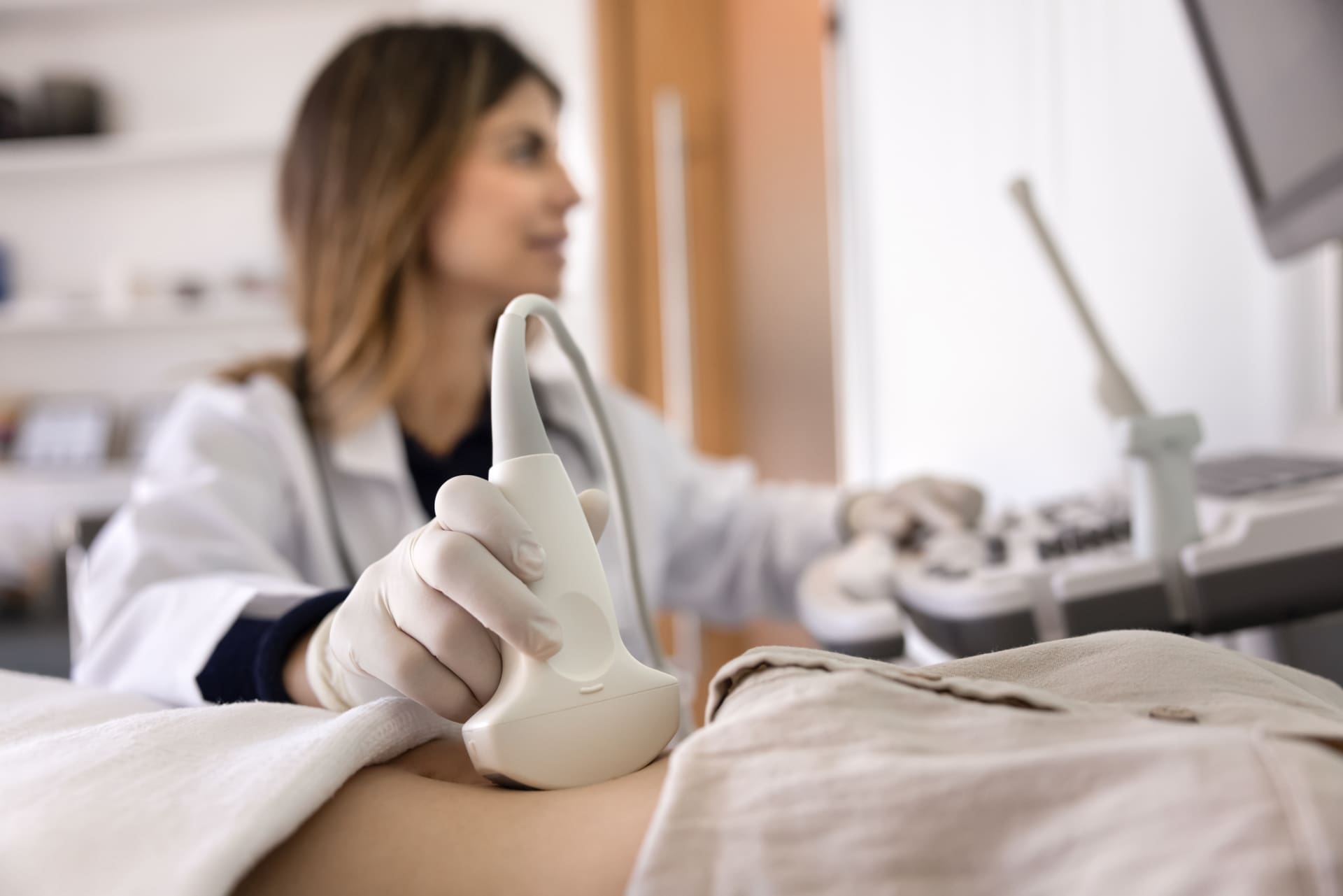
Students learn to use high-frequency sound waves to create dynamic images of organs, tissues, and blood flow within the body. The curriculum covers major areas of sonography including abdominal and small parts imaging, obstetric and gynecologic imaging, vascular ultrasound, ultrasound physics, and instrumentation.
Training combines academic coursework, hands-on scanning laboratory practice, and three supervised clinical externships. Students who successfully complete the program are awarded an Associate in Science in Diagnostic Medical Sonography.
1 Program length when completed on standard schedule.
*Program length may vary depending on student schedule, educational plan, transfer credits, and holidays.
What Does a Diagnostic Medical Sonographer Do?
Diagnostic medical sonographers use ultrasound equipment to produce images that physicians use when evaluating medical conditions. Their work combines technical imaging skills with direct patient care.
Responsibilities can include preparing and assessing patients, selecting and operating ultrasound equipment, following established scanning protocols, capturing diagnostic-quality images, performing measurements, recognizing normal and abnormal anatomy, documenting technical observations, and communicating findings to the interpreting physician.
Because sonographers interact directly with patients and healthcare professionals, the role requires attention to detail, communication skills, technical knowledge, sound judgment, and a strong commitment to patient safety.
Goals and Duration
Diagnostic Medical Sonography Program Goals
The Diagnostic Medical Sonography program is designed to help students develop the technical, clinical, and professional skills required for entry-level sonography practice.
Students learn to apply ultrasound physics and instrumentation principles, recognize normal and abnormal anatomy, perform sonographic examinations using established protocols, and use appropriate scanning techniques for abdominal, obstetric, gynecologic, small-parts, and vascular studies.
The program also emphasizes patient-centered care, communication, ethical and legal responsibilities, infection control, safety, critical thinking, problem-solving, teamwork, and continued professional development.
“And my deepest gratitude to the CNI College faculty, Dr. Mahmud Khokhar, and Mr. Ramin Mirbostani. Thank you for always believing in me.”
Haleh GhazianCNI Graduate
Program Duration
The Diagnostic Medical Sonography program consists of 2,588 clock hours and 163 quarter credits completed over 10 quarters. The standard program length is approximately 24 months, or 104 weeks, although actual completion time may vary based on student schedule, educational plan, transfer credits, and holidays.
The program is delivered in a blended format and includes 960 hours of supervised clinical externship training divided among three 320-hour clinical experiences during the final three quarters.
Clinical Training
Hands-On Laboratory and Clinical Training
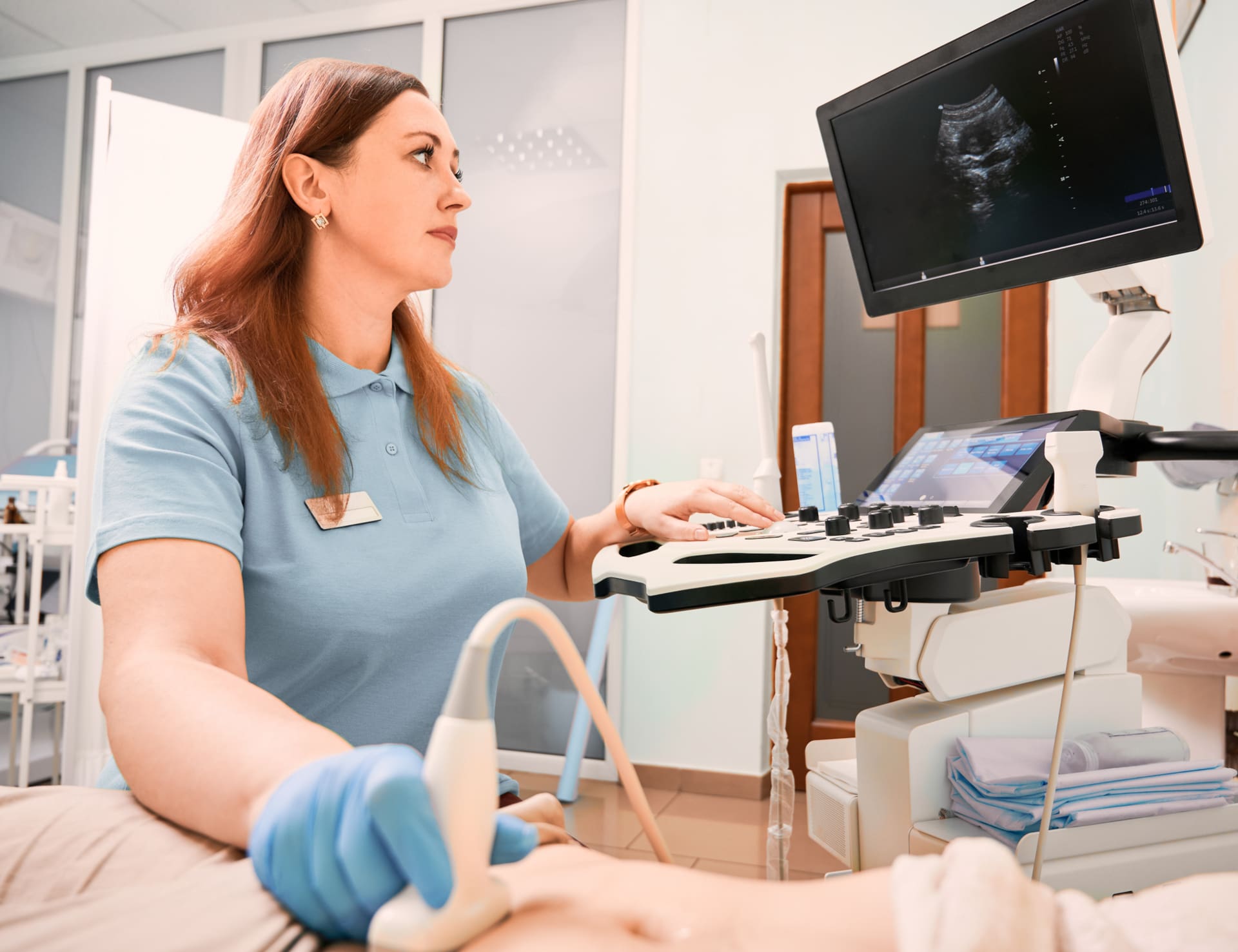
Learning diagnostic medical sonography involves more than understanding anatomy and ultrasound concepts. Students also need opportunities to develop scanning techniques, work with ultrasound equipment, evaluate images, perform measurements, and interact with patients.
Throughout the core portion of the program, students participate in laboratory instruction covering abdominal and small parts imaging, obstetric and gynecologic imaging, vascular ultrasound, and ultrasound instrumentation.
Clinical training begins in Quarter 8. Students complete three supervised externships totaling 960 hours at assigned diagnostic medical ultrasound facilities such as hospitals, clinics, or imaging centers.
During these experiences, students work under the supervision of qualified sonographers, physicians, and CNI College clinical personnel while developing practical skills through observation and participation in patient ultrasound examinations.
Courses
Diagnostic Medical Sonography Curriculum
Quarters 1-2
Introduces the technology and online learning tools used throughout the program, including computer applications, Canvas, online research resources, and academic technology.
Develops written and verbal communication skills used in healthcare, including professional correspondence, documentation, technical writing, grammar, and clear patient-care reporting.
Covers major concepts of college mathematics and algebra, including functions, equations, probability, matrices, mathematical reasoning, and problem-solving.
Introduces physics concepts that support the study of diagnostic medical sonography, including motion, energy, waves, sound, electricity, magnetism, reflection, refraction, attenuation, and the Doppler effect.
Examines human anatomy and physiology, including cells, tissues, metabolism, skin, muscle, bone, body systems, homeostasis, and disease processes.
Introduces medical language through prefixes, suffixes, word roots, and terminology associated with major body systems, diseases, diagnostic procedures, and medical interventions.
Quarters 3-5
Covers patient care, professional scope of practice, healthcare ethics, HIPAA, OSHA requirements, imaging safety, and patient interaction.
Explores anatomy and physiology as they relate to ultrasound imaging, including abdominal and pelvic organs, cardiovascular structures, small parts, and the endocrine system.
Introduces abdominal and small-parts sonography, including normal anatomy, common pathology, scanning techniques, and documentation involving areas such as the abdomen, breast, thyroid, prostate, and testes.
Builds on DMS 210 with more advanced study of abdominal and small-parts anatomy, pathology, scanning techniques, and preparation of technical information for interpreting physicians.
Introduces sonographic evaluation of the female pelvis and developing fetus, including anatomy, pathology, scanning protocols, documentation, and biometric measurements.
Continues the study of obstetric and gynecologic sonography with more advanced imaging techniques, pathology, measurements, and documentation.
Quarters 6-7
Introduces arterial and venous anatomy, hemodynamics, common vascular conditions, and scanning techniques for areas including the carotid arteries, extremities, veins, and abdominal vessels.
Builds on introductory vascular imaging with more advanced study of vascular anatomy, pathology, hemodynamics, and scanning techniques.
Introduces ultrasound physics and equipment, including acoustic principles, pulsed ultrasound, Doppler, imaging-system components, artifacts, quality assurance, safety, and equipment controls.
Continues the study of ultrasound physics and instrumentation, including advanced acoustic and Doppler principles, imaging artifacts, system operation, quality assurance, and ALARA safety practices.
Quarters 8-10
Begins supervised clinical experience in a diagnostic medical ultrasound facility, where students start applying classroom and laboratory skills in patient-care environments.
Reviews ultrasound physics and instrumentation while providing practice examinations, test-taking strategies, time-management techniques, and guidance for the ARDMS Sonography Principles & Instrumentation examination.
Develops career planning, networking, communication, resume writing, interview preparation, and job-search skills.
Prepares students for American Heart Association Basic Life Support certification, including CPR, rescue breathing, AED use, airway obstruction, and team response.
Continues supervised clinical training as students further develop practical sonography skills through participation in patient ultrasound examinations.
Provides advanced supervised clinical experience as students continue developing their skills in abdominal, small parts, obstetric, gynecologic, and vascular ultrasound examinations.
Career Opportunities
Career Opportunities in Diagnostic Medical Sonography
Graduates of the Diagnostic Medical Sonography program may pursue entry-level opportunities in healthcare environments such as:
- Hospitals
- Diagnostic imaging centers
- Medical clinics
- Other facilities providing ultrasound services
Diagnostic medical sonographers work with interpreting physicians and other members of the healthcare team to obtain ultrasound images, document technical findings, support patient care, and provide information used during the diagnostic process.
The program is designed to prepare students for the ARDMS Sonography Principles & Instrumentation examination and specialty examinations in Abdomen and Obstetrics & Gynecology.
Graduation Requirements
AS in Diagnostic Medical Sonography Graduation Requirements
To successfully complete the Diagnostic Medical Sonography program, students must:
- Complete all required program courses and hours.
- Earn a grade of at least 75% in all terms and courses.
- Meet required classroom, laboratory, clinical, and skill proficiency standards.
- Complete the Sonography Clinical Competency Checklist requirements.
- Complete all required clinical externship hours.
- Receive satisfactory clinical evaluations.
- Fulfill applicable financial obligations and graduation requirements of CNI College.
- Complete applicable graduate and financial aid exit interviews.

Program Features
Resources Included with the Program
Program materials indicate that Diagnostic Medical Sonography students receive access to resources and supplies designed to support their education, including:
- E-books
- Program supplies
- College-issued uniforms
- Immunization and physical examination resources
- CPR training
- Laptop computer
- ZSpace 3-D anatomy technology
- 3-D Anatomage anatomy resources
- Career preparation services
Career preparation includes job-search assistance, interview techniques, resume development, job analysis, and job leads.
Student Support
Student Resources and Support
Diagnostic Medical Sonography students have access to CNI College’s academic and student support resources throughout the program.
These resources can help students as they progress from foundational coursework into hands-on laboratory education and clinical training. Career preparation is also incorporated into the curriculum to help students develop resume, interview, networking, and job-search skills.
Credentialing
Preparation for Professional Sonography Examinations
The Diagnostic Medical Sonography curriculum includes education in ultrasound physics, abdominal imaging, obstetric and gynecologic imaging, vascular imaging, and clinical practice.
The program is designed to prepare students to take the American Registry for Diagnostic Medical Sonography (ARDMS) Sonography Principles & Instrumentation (SPI) examination and the ARDMS specialty examinations in Abdomen (AB) and Obstetrics & Gynecology (OB/GYN).
Program materials state that passage of the SPI examination and the applicable specialty examination is required for credentialing as a Registered Diagnostic Medical Sonographer (RDMS).
Frequently Asked Questions
Diagnostic Medical Sonography Program FAQ
The Diagnostic Medical Sonography program is an Associate in Science degree program designed to prepare students with the knowledge, scanning skills, patient-care abilities, and clinical experience needed to pursue entry-level work in diagnostic medical sonography.
The standard program length is approximately 24 months or 104 weeks across 10 quarters. Actual completion time may vary depending on the student’s schedule, educational plan, transfer credits, and holidays.
Students who successfully complete the program earn an Associate in Science in Diagnostic Medical Sonography.
The program consists of 2,588 clock hours and 163 quarter credits.
The program uses a blended delivery format. Academic instruction includes online learning, while laboratory training and clinical externship experiences require hands-on participation.
Students complete 960 hours of supervised clinical externship training divided among three 320-hour clinical experiences.
Clinical externship training begins in Quarter 8 and continues through Quarter 10.
Clinical experiences take place at assigned diagnostic medical ultrasound facilities such as hospitals, clinics, and imaging centers.
Students study abdominal and small-parts sonography, obstetric and gynecologic imaging, vascular ultrasound, ultrasound anatomy and physiology, patient care, ultrasound physics, Doppler principles, instrumentation, image optimization, and other related subjects.
Yes. The curriculum is designed to prepare students for the ARDMS Sonography Principles & Instrumentation examination and specialty examinations in Abdomen and Obstetrics & Gynecology.
The Sonography Principles & Instrumentation examination evaluates knowledge related to ultrasound physics and instrumentation. The curriculum includes dedicated ultrasound physics courses and an ARDMS SPI Exam Preparation course.
Diagnostic Medical Sonography students must complete all terms and courses with a grade of 75% or better.
Diagnostic medical sonographers may work in settings such as hospitals, clinics, diagnostic imaging centers, and other healthcare facilities where ultrasound services are provided.
Tuition and fees are established by CNI College and may change over time. Prospective students should review the current CNI College Catalog or speak with an Admissions Advisor for current program cost information.
Prospective students should contact CNI College Admissions for current admission requirements and information about the enrollment process.